Showing posts with label Gemology. Show all posts

Thursday, April 30, 2020

My Membership With the Women's Jewelry Association


About three years ago I got an email from my friend Lauren Priori asking if I'd help establish a Philadelphia Chapter of the Women's Jewelry Association. We had noticed that even though we are a craft centric city, there was a lack of communication and camaraderie amongst designers and artists.

In recent years, I have noticed a shift in this field from secretive and competitive to more communal and uplifting. It was great time to create an opportunity for people to meet up and share what projects they were working on and have a safe place to learn a new skill.

Needless to say, here we are today as an official chapter with 30+ members and have had three different presidents, including our current President Lauren Volovar. What had originally started as social happy hours has turned into a mentoring group. Each member brings their own unique perspective and has valuable experience to share.

Our younger student members are experiencing the pinnacle of technology while our older retired members have ushered in a more female friendly environment in what was a traditionally male dominated industry.


In helping curate this group I have learned how to project manage, event plan, and have tremendously improved my public speaking.

Through WJA I was given the chance to grow and have blossomed into a flourishing jewelry professional. As a president I was offered a trip to Austin, Texas to gather with other chapter leaders to discuss challenges each city faced and to framework a plan for continued gender equality research that will allow us to keep passing a better tomorrow for women in art.
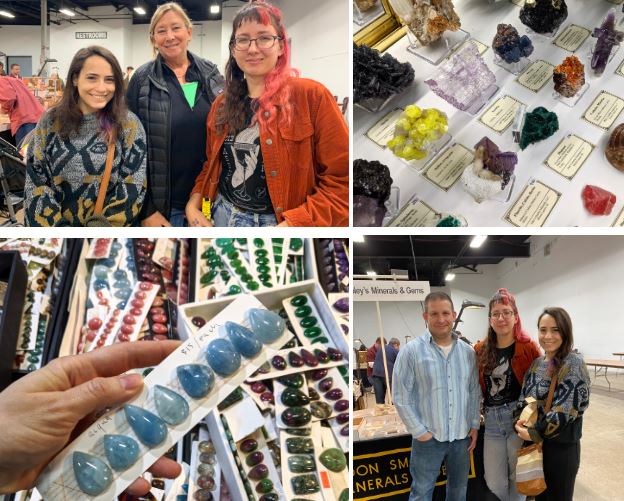

I am so thankful for this group that took someone like me who was very frustrated with their degree and felt like a spinning wheel going nowhere in a huge machine. Through networking I was able to find a passion in jewelry history and appraising that I wouldn't have had exposure to otherwise. These women have supported me in changing my career as well as giving me the connections to do so.


Even now in this uncertain time WJA has been a guiding light. Each Monday we highlight one of our members and their work. On Tuesdays we focus on an opportunity to give back with a featured fundraiser.

I've also have been thankful to be able to continue to develop my skills through webinars and courses. Most recently I participated in the webinar educating on Google advertisement and SEO optimization, something that directly improved my ability to work at home.

As a member, I'm also offered a special discount on continuing my GIA courses in my pursuit of my Graduate Gemologist title.

This group has been fundamental in who I have become professionally and I look forward to helping others navigate their paths to find a fulfilling career.


Friday, February 15, 2019

Pearls

One of the things I enjoy the most about jewelry, is that each piece weaves a tapestry of a story. Narrative details like stone settings and repairs are snapshots in time. Whispering about the technology favored, stones that were marketable, or even the skills that were available in different time periods.

Jewelry is intimate for most people, and more often than not, this sentimental item will outlive its owner to be passed on to next of kin or to be discovered by someone completely new. That's why I always love coming across tales like this one.

A fisherman sleeps restfully with a massive world record tucked soundly beneath his bed for 10 years. A treasure estimated to be worth $100 million and could feasibly be the largest natural pearl ever found, weighing 75lbs.

To be honest, the mystique of pearls has tarnished a bit for me. Then I hear stories like this one and it ignites the enigma of the pearl for me again.

Mikimoto introduced cultured pearls to the world by 1920, thus taking the element of natural wonder out of the recipe. No longer was it a daunting task to uniquely find a perfectly round pearl, the arduous adventure of doing that enough times to form a strand, and the even more tedious task of matching color/luster into a strand.

Pearl necklaces were rare feats of discipline and luck plucked by human hands to be admired and adorned. Mikimoto cracked this code and made it accessible for everyone, on repeat, devaluing the market. It's far more cost effective to cultivate than to hunt for a naturally occurring pearl.

As a budding gemologist and a jaded pearl gluer, I have lost that sparkle in my eye for pearls, but the rest of the world definitely has not. Pearls emote feelings of motherhood and femininity. Motherly in the sense that the pearl is carried by a mollusk, shaping, forming, and giving birth; an allegory for the miracle of creation. Mikimoto did make pearls accessible for everyone, and in a way, that is really beautiful. These precious gems are no longer reserved for the elite, but are now staples for first communions, weddings, and other special milestones.


It makes one ponder, how many more world wonders are successfully hidden? Kept out of the public eye due to either blissful ignorance that it could be valuable or the personal belief that it's a talisman of sorts, bringing good fortune and prosperity.


Tuesday, July 3, 2018

Happy Fourth of July from America's Largest Diamond

In honor of the Fourth we're taking a look at the largest American found
diamond, Uncle Sam.


Discovered by Wesley Oley Basham, Uncle Sam was unearthed in 1924 from the Prairie Creek Pipe Mine in Murfreesboro, Arkansas.  The hefty rough was named after Basham’s nickname “Uncle Sam” and weighed in at 40.23 carats. Its discovery drew attention to the failing Arkansas Diamond Corporation, rescuing the company from its debt and inevitable closure that winter.  Now the mine is known as The Crater of Diamonds State Park. It is the only mine in the world open to the public and has become a popular vacation destination for American rockhounds.

Uncle Sam was decided to be stylized as an 12.42 carat emerald cut fashioned by
Schenck & Van Haelen of New York. The stone was graded as an M in color, for it has been described to be a pale brown or slightly pink.  The VVS1 clarity was demonstrated beautifully in the stepped facets as a viewer could not see an inclusion without the assistance of a loupe.


Uncle Sam was sold to a private collector in 1971 for $150 million and is unfortunately not
on display but is still a celebrated American treasure.


From Uncle Sam, have a very happy and safe Fourth of July!


Sources:
http://www.craterofdiamondsstatepark.com/
https://en.wikipedia.org/wiki/Uncle_Sam_(diamond)


Wednesday, February 21, 2018

How Does The Lesotho Diamond Measure Up?

Early this year the world’s fifth largest gem-quality rough diamond was found at Lesotho
Africa’s Letseng mine. D in color and weighing in at 910 carats, the gem is the largest
diamond to have been found in that particular mine and is estimated to be worth
$40million.

The size is striking, comparable to a baseball in size and weight, but how does it measure
up to other large gem-quality diamonds found?


Starting with the most famous and by far the largest gem-quality rough diamond ever found,
the Cullinan.  It was discovered by Thomas Cullinan from the Premier No. 2 Mine in Cullinan,
South Africa in 1905. Weighing a whopping 3106.75 carats, the stone was ultimately cut into
9 stones total by the Asscher brothers.  The Cullinan I and II were used in the British Crown
Jewels while the other 7 stones remained with the Asscher family.  Even cut, the Cullinan is
still record holding.

The Cullinan I is the world’s largest clear cut diamond weighing in at 530.4 carats and D in
color. This Great Star of Africa, currently resides in the scepter of the British Crown Jewels
on display at the Tower of London.

The Cullinan II, the Lesser Star of Africa, is that second largest clear cut diamond weighing
in at 317.4 carats.  This stone is also part of the British Crown Jewels, set in the front of the
Imperial State Crown below the Black Prince’s Ruby (famously misnamed and is actually a red spinel).


The second largest gem-quality rough diamond is the Lesedi La Rona. It was found in the
Karowe Mine of Botswana in 2015 weighing in at 1109 carats.  The stone was purchased in
2017 by Graff Diamonds and has since been cut into smaller sellable stones.


Then we have the Excelsior Diamond which was the world’s largest gem-quality rough
diamond prior to the discovery of the Cullinan and is currently ranked third among its peers
in that category at 970 carats. The Excelsior Diamond was found in 1893 at the Jagersfontein
Mine in South Africa and has since tragically been cut into 21 insignificant stones that were
sold to several different buyers. One of the famous jewelry pieces to come from this stone is
a bracelet holding the 69.68 carat pear Excelsior I.  The stone was cut by the Asscher
Diamond Company in 1903 and eventually sold to and set by Robert Mouawadin 1996.


Finally we have the fourth largest gem-quality stone, the Star of Sierra Leone, extraordinarily
close in weight to the Excelsior Diamond at 968.9 carats. It is the largest alluvial diamond
ever discovered and was uncovered by miners in 1972 in the Diminco alluvial mines in Sierra
Leone. Harry Winston purchased the diamond and had it cut into 17 stones. Six of these
diamonds are present in Harry Winston’s “Star of Sierra Leone” brooch.


It seems that Africa is still the juggernaut when it comes to large gem-quality rough.
Impressively, only two of these diamonds are known to have been found using modern LDR
technology, the Lesedi La Rona and the Lesotho.

I can’t wait to see if how this magnificent stone ends up, whether it is cut into several smaller
pieces to be auctioned or if a mighty stone is cut and set into a work of art. Either way it is
definitely a stone to stay tuned into.

Friday, May 19, 2017

Artemis and Apollo, the world's most expensive earrings

In Greek mythos Apollo and Artemis are the twin offspring of Zeus and Leto.
Artemis is revered as the Greek goddess of the Hunt, her brother Apollo is revered as the Greek god of medicine and healing, also known to bring illness and plague.

In the gem world the twins Apollo and Artemis are known as the world’s most expensive earrings, selling for $57.4 million at the Sotheby’s 2017 Magnificent Jewels and Noble Jewels auction held in Geneva on May 16th.


The pair was originally estimated to sell for around $70 million and were believed to be sold off separately.  However a private buyer preserved the romanticism of the twin earrings by purchasing them as set.

Artemis is 16ct VVS2 pink pear diamond that was purchased for $15.3million while her brother Apollo, a flawless 14.54ct pear, sold for much more at $42.1 million.  This is because Apollo has a rarer deep vivid blue coloring caused by its exposure to the element boron during formation.
Adding to Apollo’s legacy it is documented to have been sourced from the famed Cullinan Mine in South Africa.  Yes, the same mine responsible for the British Crown Jewels.


Since the pair went to a private buyer, they are unlikely to be seen for some time, so hopefully those able to attend the auction were able to revel in their cosmically named brilliance.


Sources:
https://www.gemkonnect.com/news/diamond-earrings-fetch-record-574m-sotheby’s-geneva-auction
http://frame.bloglovin.com/?post=5597365757&blog=10937893&frame_type=feed


Wednesday, November 30, 2016

Millennials and Diamonds, an Open Letter

Typically I just post about jewelry projects that interest me and try to keep my blog light and informative, but as a millennial working in the jewelry industry I am tired of being told what I want and what I should be looking for by the founding diamond companies. It’s getting too painful to ignore the broadening disconnect between iconic brands and the millennial customers they are trying to impress. It almost seems like “millennial” is a buzzword that no one really bothered to research.

I keep coming across campaigns catered to my age group, like parents talking over their children's heads, like they are not there, incapable of listening and understanding.  I see it, I hear you, and your are missing our thought process by miles.

The most recent campaign I have come across is Real is Rare, Real is a Diamond.  Released by Diamond Producers Association (DPA) trying to appeal to the millennial with a whimsical video of a carefree couple lost in the wanderlust of life.  The short video is comprised of flashes of incoherent images with a monologue detailing a topical description of their "real" relationship. DPA makes a desperate attempt to move away from the marketing archetype of diamonds = marriage, but it falls short. They are trying to loosen up and connect to millennials with a video that seems forced, insincere, and the diamonds weren't even the focal point. I lost interest in the strained story and actually ended up focusing more on the clothing in the video than the diamond necklaces that were being shown. In the end the same archaic message weakly came across, couples should solidify a relationship by gifting diamonds.


Another campaign I’ve seen recently is from De Beers. De Beers had the incredibly successful 1947 Ad campaign A Diamond is Forever by copy-writer Frances Gerety of N.W. Ayer & Son. At the time De Beers was top dog of the industry controlling the ebb and flow of diamond resources.  So of course they would be able to control the media for the diamond as well.  Now the diamond giant has been minimized due to bad press and in 2012 De Beers has shifted 85% of its ownership to another diamond company.

So now, with less clout than they had before, they tried to strike gold again with their 2015 campaign, Seize the Day.  The campaign failed to impress since it was more of the same boring concept, shoving engagement rings at the consumer so aggressively that they walk away. We live in a time where our worth is not determined by marriage, so why does the industry keep advertising that way?


Too be blunt, most of the diamonds I own I have bought myself with my hard earned money.  A treat I was proud to purchase for myself because I work with jewelry and like jewelry.  As for my longtime boyfriend, he does shower me with gifts whether it be jewelry or artwork, it does not matter, the gift was thoughtful and by no means defined our relationship.

A powerful Ad I think people would respond to would cater to the fact most millennial women buy themselves jewelry as a deserved treat.  The industry does realize that we are the bulk of the US diamond buying market, but they clearly still do not understand why.  They do not understand that we have satisfaction in working hard and earning something we desired.  It is completely gratifying to wear something you worked for. To go out with friends and say, “I worked overtime and absolutely owned my latest project, I treated myself to new earrings”.


Not at all to undermine the institution of marriage, I just went engagement ring shopping myself, but it needs to be realized engagement is not the cornerstone of the diamond market anymore, it’s a part of a whole view.  And if you keep only looking at one small facet of an idea, you are bound to miss a major amount of opportunity. I love diamonds, I love the industry, I love my job, but I am at a complete loss every time I see a new campaign catered to “the millennial”.

Monday, January 25, 2016

A look at Heritage in Bloom

   Pictured above "Heritage Flower Gaze"


Chinese jewelry retailer, Chow Tai Fook, purchased the Cullian Heritage rough diamond in 2010 at 35.3 million dollars.  Weighing in at an astounding 507.55 carats, artist Wallace Chan undertook the task to cut this miraculously (D) in color, near flawless diamond into several smaller counterparts in the journey to create his masterpiece, “A Heritage in Bloom”


47,000 hours of manipulation to yield the gorgeous and innovative neckpiece that can be worn 27 different ways.  Adorning the very center is a 104 ct Forever Mark inscribed diamond cut from the Cullian Heritage.  It is set in a layered seat to create dimension and to keep continuity of the piece, the eye completely remains undistracted by the setting and can focus on the form of the piece.  This centerpiece is echoed by its smaller cut brethren descending from the same Cullian Heritage diamond creating a sense if unity and completeness.  Historically we rarely see a cohesive plan for a high grade diamond, typically it gets passed around and cut down several times , so it’s truly beautiful to have it cut and set altogether in one place, one story from beginning to end.


Incorporated into the necklace are winged bats, a symbol of good fortune in the Chinese culture.This iconography is coupled with diamond and jade encrusted butterflies, a symbol of eternal love.

                                                  "Heritage Bright Day"


This neckpiece has an optimistic undertone of love and fortune apparent in the symbolism described above, but the mood is well executed in the utilization so soft pink diamonds and light shades of jade.  It portrays a soft tone of innocence and delicateness that we associate with love.  The sharpest edge in the piece is that of the bat wings that rest upon ones shoulder, even that has a sensual curve that we would not find in the bat anatomy in nature.


                                                    "Heritage Ethereal"

In past decades, even centuries, a piece as ornate as this would be created to showcase the wealth and power of the commissioner.  Here in the modern era we are treated in the delight to marvel it as a spectacular piece of museum quality art.  A means to push our ideas of how we can create something beautiful from something rough and amorphous, and have the end game be something to be admired for years to come.


Sources:

Artist's Site: http://www.chowtaifook.com/en/node/30685

Pictures: http://www.nationaljeweler.com/galleries/editorial/A-Heritage-in-Bloom-10004.shtml#4

Information: http://www.forbes.com/sites/anthonydemarco/2015/09/03/wallace-chan-creates-statement-necklace-from-507-carat-diamond/#5edce2ae7629

http://www.barrons.com/articles/200-million-masterpiece-lifts-luxury-to-new-heights-1441335925

Sunday, May 17, 2015

A Lesson in Rough Diamonds

A friend of mine recently approached me about procuring a rough diamond; uncut, untreated, raw from the earth.  I was pretty excited at the prospect of handling a new, fresh idea versus the literal hundreds of halo engagement rings I have had the pleasure to build over and over again throughout my career.  As much as I love diamonds, and always will, I must say I am getting pretty jaded to the current design market.  Commercial jewelry stores filled with trays upon trays of the same idea.


So obviously when my friend came to me with a nontraditional idea, I jumped at the opportunity to lend a hand.   She initially started sending me Etsy links, which I wholeheartedly admit I cringed.  Etsy can be a wonderful place for design, it brings the internet to the ordinary craftsman and broadens choices for consumers, but it also can be dangerous in the sense you do not know what you are buying.  There is no safety net, and I could tell from some of the pictures I was seeing, the stones depicted and being called diamonds were most likely Herkimers. 


“Herkimer Diamonds are quartz that have grown non-traditionally in that typically their hexagonal shape terminates to a point only at one end of the stone, but in Herkimers, the hexagonal point is echoed also on its opposing side.  This growth causes the quartz to have two points on either end due to the fact the mineral did not grow in close contact with a host rock (http://geology.com/articles/herkimer-diamonds.shtml)”.


So after telling my friend that we should try to find a stone in person, I began educating myself on raw diamond characteristics.

 I know that diamonds naturally can grow in a cube, octahedron (8 sided), or a dodecahedron (12 sided) because of how neat its crystalline structure is atomically composed from Carbon. My DCA background then took me right to the 4 C’s and also has taught me that a third of a diamond’s price is the way it’s cut.  We already know we are taking the cut out of the equation which will dramatically cut the price.  So what we have left is color, carat, and clarity.


Carat is the weight of the stone, to which my friend had not particular preference, so that was not a hindrance. “So I looked into color and clarity, from my research I found that raw diamonds are typically not very white/clear, they are usually tinted gray or yellowish colors since the gem quality diamonds are usually cut for retail product.  That helped knowing that I am not looking for a crystal clear stone. Also I could look for how the surface was formed, like fingerprints.  It could be grooved with growth lines, a frosted or waterworn surface due to water erosion (like sea glass), or it could be Mirrored or glass-like. This knowledge helped but I truly needed to know the difference that would make telling diamonds apart from another stone much easier. That characteristic is a Trigon, tiny triangles that can be thought of as a diamond’s stretch mark (https://www.cigem.ca/ross/rough.html).” 


Armed with new found diamond knowledge, I embarked to the New York/New Jersey Gem and Mineral Show in hopes to find an acceptable diamond specimen.  We found a plethora of Herkimer stones but the search was seemingly growing bleaker by the hour when it seemed no diamonds were in attendance this year, until finally we found a booth that knew of a California based company that specifically sold precious gemstones.  There we fortunately found a few rough diamonds to excitedly choose from and had to decide what was more important; size, shape, or color.  We ended up finding a beautifully perfectly shaped octahedron that was very white in color with visible Trigons.


Sources:
Diamond Photos/Information source: https://www.cigem.ca/ross/rough.html

Herkimer Photo/Information source: http://geology.com/articles/herkimer-diamonds.shtml

Monday, August 4, 2014

Diamonds are running low but prices continue to grow..

So I happened upon an interesting read while on LinkedIn: Here's the article

Lately colored stones have been taking center stage in the jewelry field, particularly since the prices of diamonds and gold continue to rise, and perhaps because a certain British princess rocking a gorgeously huge natural sapphire. And let's face it, it's much more cost effective to purchase a gemstone wedding set versus the grotesquely priced diamond counter-part.


I've always defended the high price of diamonds being justified in that I understood how unique and rare each well cut stone was.  It's also an easy price to defend when you know that the retail price is typically marked up 3X, and you know you don't have to pay that price if you know where to look.  However, lately I'm having a harder and harder time explaining away the price, especially when I see the speckled gray monstrosities that the big name chain jewelers are dishing out for an outrageous price.


The big mines that were spewing out the big, brilliant, beauties are depleting and there's no new miracle mine in sight.  What I have come to love as a jeweler, is the vintage pieces that come through, because you just don't see that size, color, or quality anymore.


What's alarming about this read is that organizations, like De Beers, think that jacking up the price is really going to sell the rarity of the stones.  Yes, good quality diamonds are rare, but not diamonds themselves.  The rare stones are the natural Emeralds and Tanzanites out there that are in the same danger of depletion, but there are no companies out there interested in the longevity of those stones since the market has been built around the diamond.

I'm interested to see how this plays out in the next coming years. I've already seen a great decline in the purchase of gold jewelry, people are going for the tougher, cheaper metals. What I am seeing in people is that if they are going to spend that huge of a chunk of change, that want that piece to last.  De Beers has famously coined the idea that diamonds are forever, but gold unfortunately does not.  I've already been approached several times about setting stones in metals like steel and tungsten. So what kind of jewelry alternatives will a future with overpriced materials bring in?

Blog post on article by Vinod Kuriyan on Gem Connect: Here's the original article

Photo Cred:

Princess Kate: link
Princess Diana's Ring: tumblr
Loose Diamonds: De Beers


Friday, May 17, 2013

Okay this one is a shout out to my fellow gemology lovers.  In Early April, I had the pleasure of being a first time attendee of the NY/NJ Mineral and Fossil Show. Being a long time veteran of many a craft show, I decided to try something new and see my beloved minerals in their most raw form. I must say I was pleasantly surprised.

Most craft shows feature booths that are set up like individualized miniature showrooms that are meant to invoke a particular mood that the artist wants you to feel.  This often creates a feeling of disunity for the craft show as a whole since it feels like you're jumping from store to store.  This is widely excepted since each booth needs to be radically different from the next to stand out making sure the artist has their voice heard. The mineral show however was surprisingly cohesive.


You were almost automatically guided through by very well labeled showcases.  It almost felt like a pop up museum in how each different family of stone was sectioned off allowing you to compare and contrast it against it's brethren. I found myself giddy and love drunk over being able to take time to analyze these stones, how they were grown, where, how they attached to other minerals,  and all other aspects of their creation.  Of course my euphoria was contagious.  I found myself conversing with other visitors that were equally as ecstatic as me to share the knowledge and wonderment of the spectacle sprawled out before us.

Now the gemstones themselves were the obvious showstoppers.  From the gargantuan to the pocket sized and growing in every direction off of every mineral imaginable.  The most successful portion of the show for me was the precious gemstone area.  It was off to the side in it's own little room with the displays set up very much like the rest of the show.  However, what made this part meaningful to me was the fact that the raw gemstones were put on display next to polished, cut, finished, and set into jewelry gemstones.  Seeing where that stone came from and how it originally looked makes you appreciate all the work that stone cutters truly do.  Jewelers often say the stone usually inspires the pieces they create. They build a work to showcase the stone, and this display in the precious gemstone area really exhibited that creation process well. You see the raw stone, which the cutter visualizes a cut stone. That stone gets cut and polished, then it's displayed in a piece of jewelry. Seeing that process broken down really created a new appreciation for gemstones for me. A lot of times you forget where they come from since we are used to seeing so many finished and accessible.

Something I would like to see, and have seen very little of, would be raw gemstones set as they are.  They come in such unique and beautiful shapes before they're cut. Even the inclusions give them a unique essence, writing a story only that particular gemstone can sow because it was in the right place at the right time to be grown.  I would love to see more jewelers share that side of the story.  I do admit to seeing some contemporary pieces exhibiting raw diamonds, but I'd love to see more.

I could go on forever about this wondrous experience and definitely know I will be checking out it's sister shows in the fall.

For more information check out their site
 http://ny-nj-gemshow.com/


WJA Philly Round Table - F. Walter Lawrence & Gustav Manz Desert Brooch

 2020 has been a whirlwind of a year, but I have been thankful to be able to stay connected with my peers through a series of virtual artist...