Showing posts with label fine jewelry. Show all posts

Thursday, April 30, 2020

My Membership With the Women's Jewelry Association


About three years ago I got an email from my friend Lauren Priori asking if I'd help establish a Philadelphia Chapter of the Women's Jewelry Association. We had noticed that even though we are a craft centric city, there was a lack of communication and camaraderie amongst designers and artists.

In recent years, I have noticed a shift in this field from secretive and competitive to more communal and uplifting. It was great time to create an opportunity for people to meet up and share what projects they were working on and have a safe place to learn a new skill.

Needless to say, here we are today as an official chapter with 30+ members and have had three different presidents, including our current President Lauren Volovar. What had originally started as social happy hours has turned into a mentoring group. Each member brings their own unique perspective and has valuable experience to share.

Our younger student members are experiencing the pinnacle of technology while our older retired members have ushered in a more female friendly environment in what was a traditionally male dominated industry.


In helping curate this group I have learned how to project manage, event plan, and have tremendously improved my public speaking.

Through WJA I was given the chance to grow and have blossomed into a flourishing jewelry professional. As a president I was offered a trip to Austin, Texas to gather with other chapter leaders to discuss challenges each city faced and to framework a plan for continued gender equality research that will allow us to keep passing a better tomorrow for women in art.
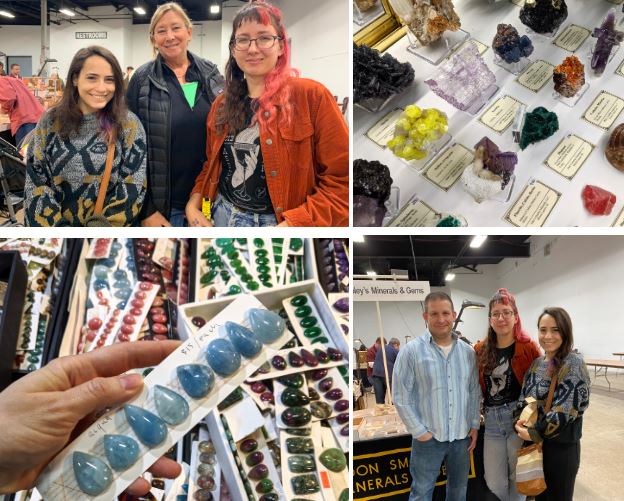

I am so thankful for this group that took someone like me who was very frustrated with their degree and felt like a spinning wheel going nowhere in a huge machine. Through networking I was able to find a passion in jewelry history and appraising that I wouldn't have had exposure to otherwise. These women have supported me in changing my career as well as giving me the connections to do so.


Even now in this uncertain time WJA has been a guiding light. Each Monday we highlight one of our members and their work. On Tuesdays we focus on an opportunity to give back with a featured fundraiser.

I've also have been thankful to be able to continue to develop my skills through webinars and courses. Most recently I participated in the webinar educating on Google advertisement and SEO optimization, something that directly improved my ability to work at home.

As a member, I'm also offered a special discount on continuing my GIA courses in my pursuit of my Graduate Gemologist title.

This group has been fundamental in who I have become professionally and I look forward to helping others navigate their paths to find a fulfilling career.


Friday, February 15, 2019

Pearls

One of the things I enjoy the most about jewelry, is that each piece weaves a tapestry of a story. Narrative details like stone settings and repairs are snapshots in time. Whispering about the technology favored, stones that were marketable, or even the skills that were available in different time periods.

Jewelry is intimate for most people, and more often than not, this sentimental item will outlive its owner to be passed on to next of kin or to be discovered by someone completely new. That's why I always love coming across tales like this one.

A fisherman sleeps restfully with a massive world record tucked soundly beneath his bed for 10 years. A treasure estimated to be worth $100 million and could feasibly be the largest natural pearl ever found, weighing 75lbs.

To be honest, the mystique of pearls has tarnished a bit for me. Then I hear stories like this one and it ignites the enigma of the pearl for me again.

Mikimoto introduced cultured pearls to the world by 1920, thus taking the element of natural wonder out of the recipe. No longer was it a daunting task to uniquely find a perfectly round pearl, the arduous adventure of doing that enough times to form a strand, and the even more tedious task of matching color/luster into a strand.

Pearl necklaces were rare feats of discipline and luck plucked by human hands to be admired and adorned. Mikimoto cracked this code and made it accessible for everyone, on repeat, devaluing the market. It's far more cost effective to cultivate than to hunt for a naturally occurring pearl.

As a budding gemologist and a jaded pearl gluer, I have lost that sparkle in my eye for pearls, but the rest of the world definitely has not. Pearls emote feelings of motherhood and femininity. Motherly in the sense that the pearl is carried by a mollusk, shaping, forming, and giving birth; an allegory for the miracle of creation. Mikimoto did make pearls accessible for everyone, and in a way, that is really beautiful. These precious gems are no longer reserved for the elite, but are now staples for first communions, weddings, and other special milestones.


It makes one ponder, how many more world wonders are successfully hidden? Kept out of the public eye due to either blissful ignorance that it could be valuable or the personal belief that it's a talisman of sorts, bringing good fortune and prosperity.


Friday, September 21, 2018

Gold Rush

There were several gold rushes throughout history which drew droves of eager prospectors from all over to an area pregnant with the promise of wealth and prosperity to those lucky enough to find the golden nuggets nestled waiting within the earth's crust.

This image sprang to mind while reading that an Australian man recently uncovered a large amount of gold in the northern goldfields of western Australia worth up to $110,000.  I really hadn't realized that the dream of striking gold was still alive for some.  Then I really thought about it, where does gold even come from?

Recently discovered "Duckfoot"

For years I've written on the history of gemstones and jewelry and why they are so preciously expensive, but why is gold precious?

Gold is an element and lives on the periodic table as a transitional element with the atomic number of 79.  It is considered to be one of the least reactive chemical elements and is the most noble of all the noble metals, making it the most resistant to corrosion.

Gold is considered very rare since it is believed there is only a finite amount in the solar system that was present as dust the day it formed. So whatever we have on earth is what we get, it does not have a recipe to form like a gemstone does. It is an element created on a celestial level and cannot be reproduced.  Gold ore is found in solid form usually as a nugget, granular, or in veins, but also exists as flakes and dust.  Gold does not have a habit formation like a gemstone does further proving it is the most malleable of all the metals.  When found during mining, what is being found is gold that is by chance clumped together in a mine-able form, and sometimes this gold is naturally alloyed with other elements and is not pure. To get pure gold, it must be refined to extract impurities and other metals.


Gold in it's purest form is very soft and to be used for jewelry needs to be alloyed with another metal for strength and sometimes color.

The most familiar karats of gold are:

10K or .417 meaning 41.7% pure gold alloyed with other metals like silver, copper, zinc, and/or nickel.

14K or .585 meaning 58.5% pure gold alloyed with other metals.

18K or .750 meaning 75% pure gold alloyed with other metals.

24K  or 999.9 is considered fine gold at 99.95% pure gold.

10k is much harder and more durable than 18k or 24k but not as rich in color is the main difference between these karats besides gold content and price.

For example I chose 18k for my engagement ring because it's rich color to matched my yellow center, and I know I'd be gentle with my ring knowing that it will be more susceptible to scratches and nicks.  For someone hard on their jewelry I always recommend 10k or 14k.

Tuesday, July 3, 2018

Happy Fourth of July from America's Largest Diamond

In honor of the Fourth we're taking a look at the largest American found
diamond, Uncle Sam.


Discovered by Wesley Oley Basham, Uncle Sam was unearthed in 1924 from the Prairie Creek Pipe Mine in Murfreesboro, Arkansas.  The hefty rough was named after Basham’s nickname “Uncle Sam” and weighed in at 40.23 carats. Its discovery drew attention to the failing Arkansas Diamond Corporation, rescuing the company from its debt and inevitable closure that winter.  Now the mine is known as The Crater of Diamonds State Park. It is the only mine in the world open to the public and has become a popular vacation destination for American rockhounds.

Uncle Sam was decided to be stylized as an 12.42 carat emerald cut fashioned by
Schenck & Van Haelen of New York. The stone was graded as an M in color, for it has been described to be a pale brown or slightly pink.  The VVS1 clarity was demonstrated beautifully in the stepped facets as a viewer could not see an inclusion without the assistance of a loupe.


Uncle Sam was sold to a private collector in 1971 for $150 million and is unfortunately not
on display but is still a celebrated American treasure.


From Uncle Sam, have a very happy and safe Fourth of July!


Sources:
http://www.craterofdiamondsstatepark.com/
https://en.wikipedia.org/wiki/Uncle_Sam_(diamond)


Wednesday, February 21, 2018

How Does The Lesotho Diamond Measure Up?

Early this year the world’s fifth largest gem-quality rough diamond was found at Lesotho
Africa’s Letseng mine. D in color and weighing in at 910 carats, the gem is the largest
diamond to have been found in that particular mine and is estimated to be worth
$40million.

The size is striking, comparable to a baseball in size and weight, but how does it measure
up to other large gem-quality diamonds found?


Starting with the most famous and by far the largest gem-quality rough diamond ever found,
the Cullinan.  It was discovered by Thomas Cullinan from the Premier No. 2 Mine in Cullinan,
South Africa in 1905. Weighing a whopping 3106.75 carats, the stone was ultimately cut into
9 stones total by the Asscher brothers.  The Cullinan I and II were used in the British Crown
Jewels while the other 7 stones remained with the Asscher family.  Even cut, the Cullinan is
still record holding.

The Cullinan I is the world’s largest clear cut diamond weighing in at 530.4 carats and D in
color. This Great Star of Africa, currently resides in the scepter of the British Crown Jewels
on display at the Tower of London.

The Cullinan II, the Lesser Star of Africa, is that second largest clear cut diamond weighing
in at 317.4 carats.  This stone is also part of the British Crown Jewels, set in the front of the
Imperial State Crown below the Black Prince’s Ruby (famously misnamed and is actually a red spinel).


The second largest gem-quality rough diamond is the Lesedi La Rona. It was found in the
Karowe Mine of Botswana in 2015 weighing in at 1109 carats.  The stone was purchased in
2017 by Graff Diamonds and has since been cut into smaller sellable stones.


Then we have the Excelsior Diamond which was the world’s largest gem-quality rough
diamond prior to the discovery of the Cullinan and is currently ranked third among its peers
in that category at 970 carats. The Excelsior Diamond was found in 1893 at the Jagersfontein
Mine in South Africa and has since tragically been cut into 21 insignificant stones that were
sold to several different buyers. One of the famous jewelry pieces to come from this stone is
a bracelet holding the 69.68 carat pear Excelsior I.  The stone was cut by the Asscher
Diamond Company in 1903 and eventually sold to and set by Robert Mouawadin 1996.


Finally we have the fourth largest gem-quality stone, the Star of Sierra Leone, extraordinarily
close in weight to the Excelsior Diamond at 968.9 carats. It is the largest alluvial diamond
ever discovered and was uncovered by miners in 1972 in the Diminco alluvial mines in Sierra
Leone. Harry Winston purchased the diamond and had it cut into 17 stones. Six of these
diamonds are present in Harry Winston’s “Star of Sierra Leone” brooch.


It seems that Africa is still the juggernaut when it comes to large gem-quality rough.
Impressively, only two of these diamonds are known to have been found using modern LDR
technology, the Lesedi La Rona and the Lesotho.

I can’t wait to see if how this magnificent stone ends up, whether it is cut into several smaller
pieces to be auctioned or if a mighty stone is cut and set into a work of art. Either way it is
definitely a stone to stay tuned into.

Tuesday, October 24, 2017

Ladies Night Art Crawl

Fall is my favorite time of year for several reason;, scarves, foliage, spiced cider, but most of all craft fairs.

My pumpkin spice fiance and I decided to enjoy the newly crisp fall air by moseying through the Ladies Night Art Crawl.  The event consisted of a string of predominantly female owned studio spaces opening their doors to the public to come look, touch, and buy made in Philly art.

Scrawled below is the map distributed by the vendors, the starting point being The Common Room , a creative space to curate woman created art.


There I came across two new artists to follow.  The first being Sadie Francis of Only in the Forest.  Francis has worked in the environmental field for 15 years, in doing so she carried her hobby over to shareable wearable art.  The flowers she encases in resin are found during long daily walks through Philadelphia’s expansive park system. I’ve seen this type of jewelry before, so what really makes these pieces poignant is knowing they’re local and made by someone who deeply cares about sustaining nature.  They’re not just flowers, they’re flowers from our community.


The second artist I came across was MEO-C.28  who created an exciting take on the necklace bib. She paints exaggerated baubles onto re-purposed fabric to create the look of a bib without the heft of it.  Light weight and handcrafted, these works give new life to a tired trend.


Last but not least is always a favorite of mine, Forge and Finish.  A trio of Temple ladies working together to handcraft jeweled treasures.  My current favorite collection is Talo, jeweled with a tasty bluish green tourmaline.  Forge and Finish does an excellent job of echoing shape between collections allowing a wearer to mix and match between collections. Each piece is a work of art with a slight edge that sets it aside from it’s peers. Very wearable while still making a statement.


Thursday, June 22, 2017

My Engagement Experience

I have spent a significant amount of my career finding the perfect ring for others, when finally last June came my turn.  Unconventionally I set out ring shopping with my mother.  Josh was open to me styling my own ring since jewelry is something I’m incredibly knowledgeable and passionate about.

To start, the best advice I can give is talk to your friends then try on everything before making any kind of decision. Try on styles that you would never imagine trying on, try the big stone and a small stone, try different metals, try everything. By doing this you’ll positively know when you found the perfect ring.  By talking with friends they will tell you where and who they went to, what they liked and didn’t like about the process. This really helps you to know what to expect when going to different shops.

My adventure started out just like that. I asked around and conceived a list of places to look, then tried on EVERYTHING, even if it wasn’t my style.

In the end I decided on a local jeweler Bario Neal. I knew I wanted a three stone style with a yellow center.  Why did I choose yellow? Well, I knew I was going with a simple design so I wanted a way to give the ring a personal twist. Having worked extensively with jewelry, I have seen so many engagement rings and really wanted something of my own that I have not seen repeatedly.  Also the journey of the yellow diamond intrigued me, so I liked the idea of having a little bit of history on my finger.

Photo by Bario Neal

Happy with my sketch, I waited for the jeweler to receive in a choice between two yellow cushion cut Kalahari diamonds from their contact in Namibia.  In cooperation with De Beers, this Namibian source mined and manufactured these diamonds. So not only am I aware of the origin of my stone, I also know I was ethically supporting the diamond economy locally in Africa.  Having this much information about my ring really got me curious and I further delved into how the yellow diamond came about as a engagement choice historically.

I found that India has been the birthplace for some of the world’s most incredibly colored stones.  These stones were very much part of past Indian culture. In fact, different colored diamonds were used within India’s caste system in the sixth-century.  

Brahmins, the priests and rulers, had white to colorless diamonds.
Landowners and warriors were defined by brown diamonds.
The merchant class, yellow. The lower classes then had heavily included grayish to black diamonds.

Beyond using colored stones as an identifying tool, fancy colored diamonds were seen as a nuanced novelty.  They did not garner popularity until the discovery of the Australian Argyle Mine in the 1980’s.

Now we have coined trade terms such as Canary and Champagne as well as other tantalizing titles to describe a diamond's color.

A diamond's journey to discovery is an arduous one where nature incubates the stone into existence in a very specific way.  The mineral carbon under intense heat and pressure within the earth’s mantle is nature’s recipe for a diamond.  Once created that diamond is then carried to the earth’s surface by a release in pressure, often some sort of volcanic activity.

Colored diamonds are produced because of the presence of trace elements. In my yellow diamond’s case, nitrogen is the reason for color the stone. The amount of nitrogen determines the color intensity. I loved the softness of the yellow in my stone in contrast to the hard yellow color of the 18 karat metal I chose.  The stone had a delicate feel, giving off a nurturing sensitivity about the beginning of this new part of Josh and I’s relationship.  It fit exactly how I felt.


So on top of color I was intrigued by story that this particular diamond had to tell, it became unique to me as well as being aesthetically pleasing to my taste.

You can check out Bario Neal's Spring 2017 collection here as well as other fun jewels:
http://bario-neal.com/


Friday, May 19, 2017

Artemis and Apollo, the world's most expensive earrings

In Greek mythos Apollo and Artemis are the twin offspring of Zeus and Leto.
Artemis is revered as the Greek goddess of the Hunt, her brother Apollo is revered as the Greek god of medicine and healing, also known to bring illness and plague.

In the gem world the twins Apollo and Artemis are known as the world’s most expensive earrings, selling for $57.4 million at the Sotheby’s 2017 Magnificent Jewels and Noble Jewels auction held in Geneva on May 16th.


The pair was originally estimated to sell for around $70 million and were believed to be sold off separately.  However a private buyer preserved the romanticism of the twin earrings by purchasing them as set.

Artemis is 16ct VVS2 pink pear diamond that was purchased for $15.3million while her brother Apollo, a flawless 14.54ct pear, sold for much more at $42.1 million.  This is because Apollo has a rarer deep vivid blue coloring caused by its exposure to the element boron during formation.
Adding to Apollo’s legacy it is documented to have been sourced from the famed Cullinan Mine in South Africa.  Yes, the same mine responsible for the British Crown Jewels.


Since the pair went to a private buyer, they are unlikely to be seen for some time, so hopefully those able to attend the auction were able to revel in their cosmically named brilliance.


Sources:
https://www.gemkonnect.com/news/diamond-earrings-fetch-record-574m-sotheby’s-geneva-auction
http://frame.bloglovin.com/?post=5597365757&blog=10937893&frame_type=feed


Monday, February 27, 2017

Charlize Theron wearing "Garden of Kalahari"


Charlize Theron elevated her pleated gold Dior dress with showstopping asymmetrical diamond drop earrings from Chopard’s “Garden of Kalahari” collection.

Crafted using fairmined 18 karat white gold and weighing in at 59.9 carats, the earrings are the definition of dripping in diamonds.


Twenty-three diamonds form the “Garden of Kalahari” collection, all cut from a single 342 carat rough diamond dubbed “The Queen of Kalahari”.
The designs are the brainchild of artisan Caroline Scheufele, who masterfully created an enchanted garden scene depicted by these breathtaking jewels.


The neckpiece is the focal point of the collection but was not worn by Theron.  It can be worn four different ways to drape the neckline in a whimsical garden theme.   


Two of the pendants of the necklace can detach and be worn as the earrings as shown on Theron.

The modified earrings mesmerize as the mismatched pear and heart stones are both graded a D in color and are flawless in clarity.  The heart is slightly heavier at 26 carats while the pear weighs in at 25 carats. The dazzling stones are accentuated by 4.35 carats worth of brilliant cut diamonds.

Charlize Theron’s choice in jewelry demonstrated that timeless craft can captivate when artfully showcased for the world to see, enrapturing with it’s unique brilliance.


Source:

http://www.chopard.com/intl/diary/the-garden-of-kalahari/


WJA Philly Round Table - F. Walter Lawrence & Gustav Manz Desert Brooch

 2020 has been a whirlwind of a year, but I have been thankful to be able to stay connected with my peers through a series of virtual artist...